
Hollow Core vs. Solid Core Interior Doors: Which Is Better?
Hollow core doors are the right call for low-traffic interior spaces where cost and weight matter. Solid core doors are worth the premium anywhere sound transmission, privacy, or durability are priorities.
That’s the rule. The rest of this article shows you how to apply it, from cost and sound ratings to fire-code requirements and a room-by-room cheat sheet.
Key Takeaways
- Use hollow core for closets and secondary bedrooms; solid core for offices, primary suites, and bathrooms.
- Hollow core doors typically rate in the low 20s for sound blocking (STC). Solid core runs 30 or higher.
- Garage-to-home doors need solid wood or steel at least 1 ⅜ inches thick, or a 20-minute fire rating.
What’s the Difference Between Hollow Core and Solid Core Doors?
A hollow core door has a thin skin wrapped around a lightweight interior grid. A solid core door replaces that open space with a dense fill, which makes it heavier, quieter, and sturdier.
- Hollow core door: A lightweight interior door with a thin wood or molded-composite skin over an open, honeycomb-style frame.
- Solid core door: An interior door with a dense engineered-wood or composite fill between its skins, giving it more weight, strength, and sound resistance.
| Hollow vs. Solid Core Doors Compared | ||
| Hollow Core | Solid Core | |
| Weight | Light, often 20 to 30 pounds | Noticeably heavier |
| Cost | Lower | Higher |
| Sound Blocking (STC) | Low 20s typical | 30 or higher |
| Durability | Dents and punctures more easily | Resists dings, holds hardware better |
| Best For | Closets, low-traffic rooms | Offices, primary suites, bathrooms, rooms near noise |
How Much More Do Solid Core Doors Cost Than Hollow Core?
Solid core doors typically cost $40 to $100 more per door than hollow core doors. Recent HomeAdvisor averages put hollow core doors at $30 to $400 each and solid core doors at $70 to $500. When you add that up across 20 doors in an average home, that can be between an $800 and $2,000 difference.
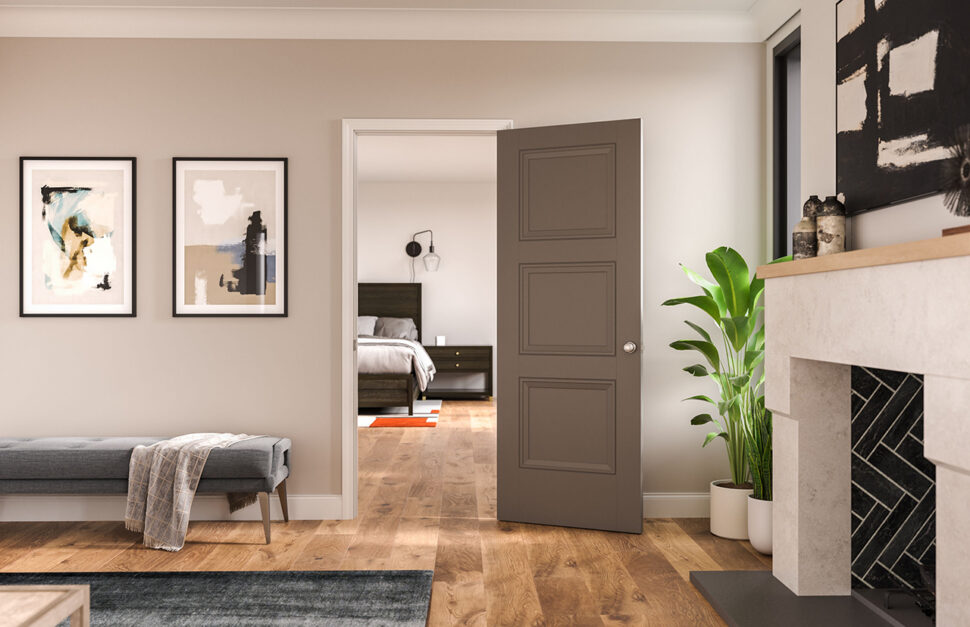
Pictured: Masonite Livingston solid core interior door
Solid core doors cost more than hollow core doors, both for the slab and for installation. The denser core uses more material, and the extra weight makes hanging the door slower and harder. A solid core slab often takes two people to lift into place. It needs hinge screws that bite into the framing, and it leaves less room for error when you trim or plane the edges. A hollow core door is easy for one person to hang. Prehung units can trim that labor, since the door arrives already mounted in its frame.
Because of the additional cost, we don’t recommend upgrading every door in your house to solid core. Most homes need solid core doors in only a handful of spots. Putting hollow core on closets and solid core on the rooms people use to sleep, work, or talk keeps the budget in check where nobody will miss the difference.
How Much Better Are Solid Core Doors at Blocking Sound?
Solid core doors are meaningfully better at blocking sound than hollow core doors. Hollow core doors typically land in the low 20s on the STC scale, while solid core doors reach 30 or higher.
| Definition: STC (Sound Transmission Class)A single number that rates how well a barrier blocks airborne sound. The higher the number, the quieter the room on the other side. |
Second Skin Audio’s solid core door guide puts typical hollow core doors in the low 20s, and solid core doors starting at 30 or more. Blocking loud speech takes a rating of 40 to 50, so a solid core door will soften a conversation. It probably won’t silence a drum kit.
| 💡Pro TipA great slab can still leak sound through the gaps. The space under the door and around the frame lets noise slip past, so if privacy is the goal, add a door sweep and perimeter seals to a solid core door. |
Which Type of Door Is Easier to Install?
Hollow core doors are easier to install. They are light enough for one person to carry, hang, and adjust. Solid core doors are heavier, so plan for a helper and use quality hinges with long screws set into the framing. Pros hanging a full house of solid core doors should expect the job to take noticeably longer.
For help with door installation, see our door hanging service →
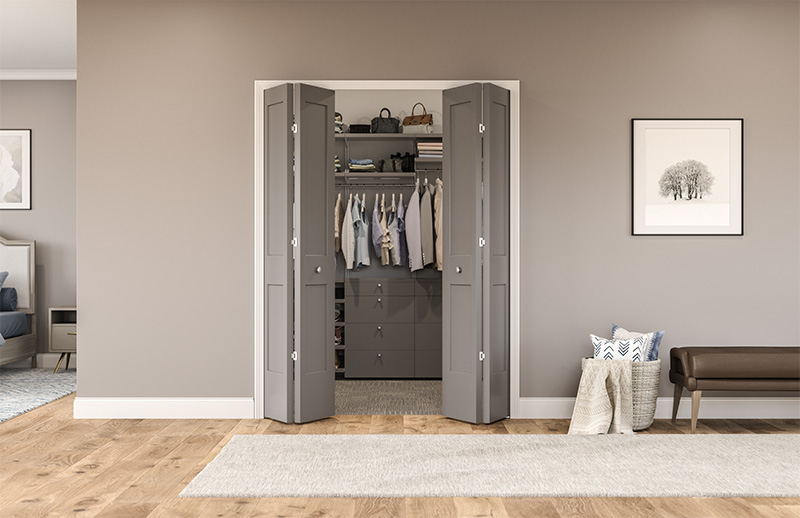
Pictured: Masonite Heritage hollow core interior door
Which Type of Door Lasts Longer?
Solid core doors last longer and hold up better to daily use. They resist dings, take slams better, and feel substantial in the hand. In high-traffic rooms with kids, pets, or constant use, that durability pays off.
Thin hollow core skins dent and puncture more easily, and they can sound like a drum when they close. But in a rarely opened closet, that shouldn’t make or break your decision.
Which Rooms Need Solid Core Doors and Which Can Stay Hollow Core?
Use hollow core doors for closets, pantries, and secondary bedrooms. Use solid core for home offices, primary suites, bathrooms, and any room next to a noisy space.
| Door Recommendations by Room | ||
| Room | Best Door Type | Why |
| Closets and pantries | Hollow core | Low traffic, no privacy needed |
| Secondary bedrooms | Hollow core | Saves budget, solid core optional for light sleepers |
| Laundry room | Hollow core | Solid core if it backs onto bedrooms |
| Primary suite | Solid core | Privacy and sound control |
| Home office | Solid core | Calls and focus time |
| Bathrooms | Solid core | Privacy |
| Rooms next to a media room, playroom, or mechanical space | Solid core | Blocks noise at the source |
| Garage entry | Solid core or fire-rated | Code requirement |
When Are Solid Core or Fire-Rated Doors Required?
Solid core or fire-rated doors are required for the opening between an attached garage and the home. Residential code requires solid wood doors at least 1 ⅜ inches thick, solid or honeycomb-core steel doors of the same thickness, or 20-minute fire-rated doors. The code also bans openings from a garage directly into a sleeping room.
Keep in mind that a solid core door isn’t automatically fire-rated. The rating comes from a labeled door assembly.
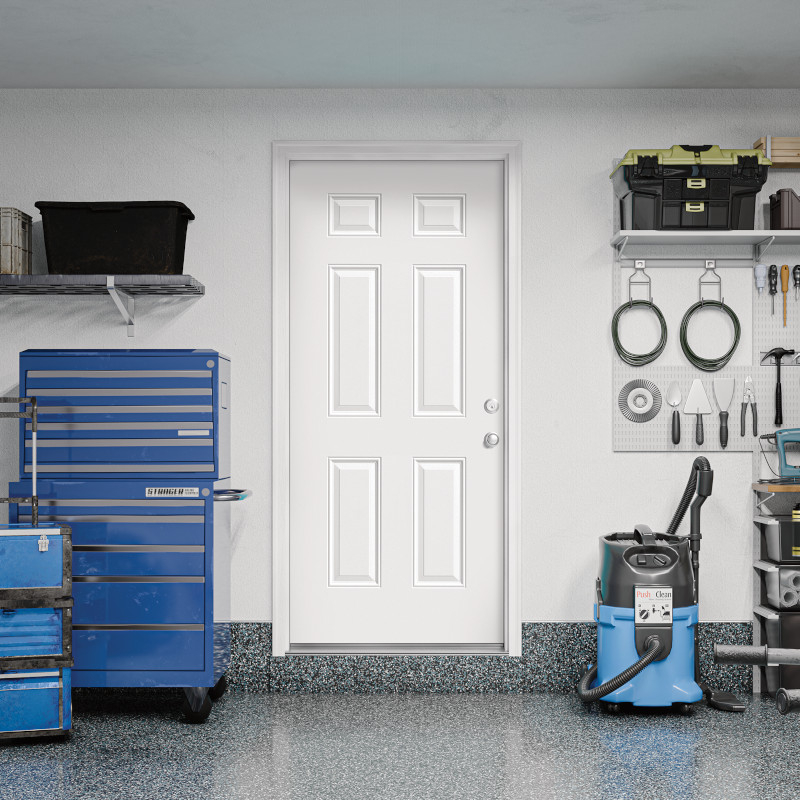
Pictured: Masonite HD Steel fire-rated garage-to-home door
Which Brand Makes the Best Interior Doors (Hollow & Solid Core)?
Masonite leads our interior door lineup, with Karona by Jeld-Wen, Stallion, and TruStile also available.
Masonite is one of the best-known interior door makers in North America, offering hollow core and solid core options across smooth, textured, flush, and panel styles. That range lets you match door style and construction to individual room styles throughout the whole house.
Compare styles on our Interior Doors & Trim page →
Get Interior Doors from Trusted Manufacturers at Standard
Hollow core doors save money and weight in closets and low-traffic rooms. Solid core doors earn their premium in offices, primary suites, bathrooms, and anywhere you need sound control, durability, or a code-compliant garage entry. Most homes use both.
Not sure what your project needs? Talk to a Standard door specialist about your project. You can contact us online or stop into one of our locations to see styles in person.
Frequently Asked Questions About Interior Doors
Can you tell a hollow core door from a solid core door by knocking?
Yes. A hollow core door sounds light and drum-like when you knock, while a solid core door gives a dull, dense thud. Weight is the other giveaway. A solid core door feels noticeably heavier when you lift or swing it, and the edge of a door can sometimes reveal the core material.
Are solid core doors the same as solid wood doors?
No. A solid core door uses an engineered or composite fill between its skins, while a solid wood door is built from lumber throughout.
Do solid core doors need heavier hinges?
Usually, yes. A solid core slab weighs more, so it benefits from sturdy hinges and long screws that reach the framing. Short or regular screws can loosen over time and let the door sag. Installers often check the door’s fit and swing after hanging. Prehung units come already set in the frame.
Can you make a hollow core door quieter without replacing it?
You can reduce noise somewhat, but not close the gap with solid core. Adding a door sweep and weatherstripping around the frame cuts leakage at the edges. If privacy matters a lot, swapping to solid core is the better fix.
What size are standard interior doors?
Both types of interior doors (hollow and solid core) come in the same standard sizes. The standard interior door height in American homes is 80 inches, and the most common width is 30 inches, according to Wayfair. Closet doors tend to run shorter or narrower, and older homes may have non-standard openings. Here’s a guide on what to do when standard sizes won’t work.