
How to Clean Quartz Countertops
Cleaning quartz countertops is simple: wipe them down with warm water, a few drops of mild dish soap, and a soft microfiber cloth. That’s it — no sealing, no special treatments, no once-a-year maintenance appointment.
That last part is worth pausing on because it’s the single biggest difference between quartz and almost every other premium countertop material. Quartz is engineered to be non-porous, meaning it doesn’t have the microscopic pits and channels that natural stone does. Without those openings, liquids can’t soak in, bacteria can’t take hold, and sealant has nothing to bond to (because it isn’t needed in the first place.
Every cleaning habit in this guide follows that one fact.
What Should You Use to Clean Quartz Countertops?
The safest daily cleaner for quartz is warm water and a few drops of mild dish soap, applied with a soft cloth or non-abrasive sponge.
Beyond the basics, a few products are worth keeping under the sink:
- Mild dish soap (like Dawn) for everyday grease and food residue
- A soft microfiber cloth to avoid introducing scratches
- An all-purpose, quartz-safe cleaner (such as Weiman Quartz Clean & Shine or a manufacturer-approved spray) for a less frequent, deeper clean without streaking
- A soft-bristle brush for grout lines or textured edges (never a scouring pad!)
Cambria®, one of the most trusted quartz brands carried by Standard Kitchens, designs its surfaces to hold up to this exact routine.
What Products Should You Avoid on Quartz Countertops?
Avoid acidic cleaners, abrasive pads, and bleach on quartz because each one attacks a different part of the material and can cause damage that’s difficult or impossible to reverse.
Understanding why each one is off limits makes it easier to remember:
- Acidic cleaners (vinegar, lemon juice, or anything with a low pH): Quartz is roughly 90% natural quartz crystal held together with resin binders. Acids break down that resin over time, leading to dulling, etching, or a rough texture that no amount of polishing can fully undo.
- Abrasive pads and powders (steel wool, scouring pads, Comet, Bar Keepers Friend): Quartz is hard, but its polished surface isn’t scratch-proof. Abrasive tools create fine scratches that dull the shine and can trap grime over time, ironically making the surface harder to keep clean.
- Bleach and bleach-based cleaners: Undiluted bleach can discolor certain quartz formulations, particularly darker colors and some resin blends. Occasional, heavily diluted use for disinfecting is generally considered safe by most manufacturers, but it shouldn’t be a part of a regular routine.
- Wax, oil soaps, or sealants: These leave a film on quartz instead of soaking in, since there’s nothing porous for them to penetrate. This can result in streaks rather than protection.
If you’re ever unsure whether a product is safe, check with your quartz manufacturer or distributor before using it. When in doubt, warm water and dish soap will never steer you wrong.
We’re here for your questions on quartz countertop care →
[IMG: inverness-everleigh-kitchen-transitional-002-23.jpg]
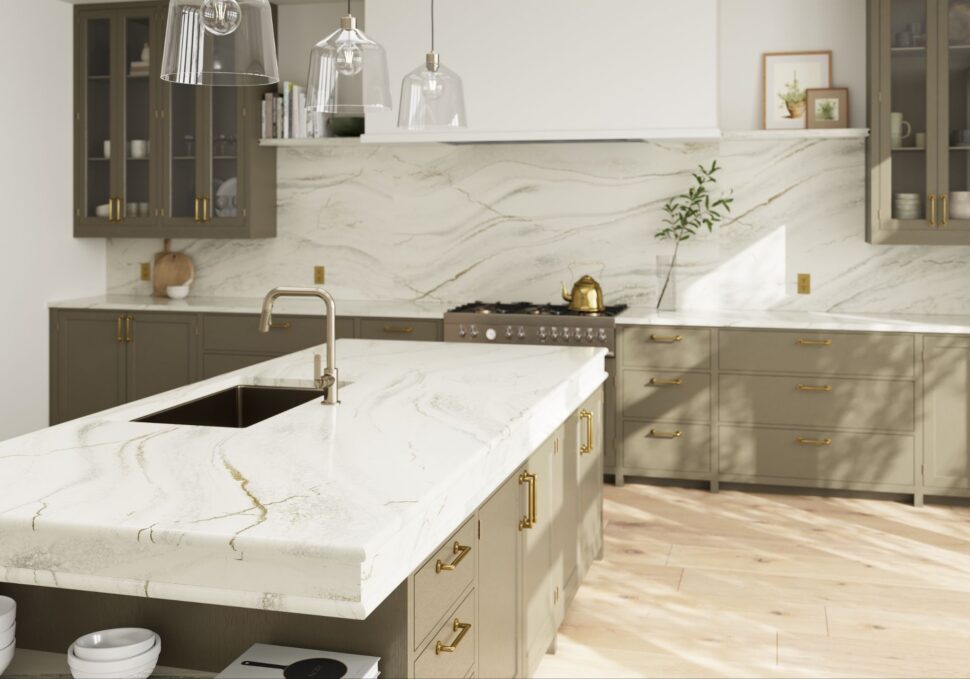
Pictured: Cambria® Inverness Everleigh™
A 3-Tier Care Routine for Keeping Quartz Spotless
The best way to maintain quartz countertops is with a simple daily wipe-down, a slightly more thorough weekly clean, and an occasional monthly deep clean for stubborn buildup.
Daily: The 30-Second Wipe-Down
After cooking or general use, wipe the surface with a damp microfiber cloth and a small amount of dish soap, then dry with a clean towel to prevent water spots. This single habit prevents the vast majority of staining and buildup before it starts.
Weekly: A Deeper Clean
Once a week, use a quartz-safe all-purpose cleaner (or a 50/50 mix of warm water and dish soap) to wipe down the entire surface, including backsplashes and edges. Let the cleaner sit for a minute or two on any dull spots before wiping, and dry thoroughly with a microfiber towel to bring back the shine.
Monthly: Stubborn Residue and Buildup
For soap scum, hard water spots, or residue that daily wiping hasn’t fully addressed, apply a quartz-specific cleaner (such as Weiman Quartz Clean & Shine) directly to the area and let it sit for a few minutes before wiping clean.
A plastic putty knife or old credit card can gently lift dried, crusted material without scratching. Never use a metal scraper.
How to Remove Common Stains from Quartz
Most stains on quartz lift with warm water and dish soap if you catch them early. The methods below are for stains that have already set in.
How to Remove Coffee Stains from Quartz
Apply a paste of baking soda and water directly to the stain, let it sit for 5-10 minutes, then wipe clean with a damp cloth. For older stains, a quartz-safe cleaner with a soft cloth usually finishes the job.
How to Remove Red Wine Stains from Quartz
Blot (don’t rub) excess wine immediately with a paper towel, then clean the area with warm water and dish soap. If a faint stain remains, apply a baking soda and water paste and let it sit for 5-10 minutes, then wipe clean with a damp cloth.
How to Remove Oil and Grease Stains from Quartz
Wipe away excess oil first, then clean with dish soap and warm water. Dish soap is specifically formulated to break down grease. A dedicated degreasing quartz cleaner can help with older, set-in oil stains.
How to Remove Ink and Marker Stains from Quartz
Apply rubbing alcohol to a soft cloth and gently dab (not scrub) the stained area, then rinse with warm water and dry. Test alcohol on a small, hidden area first if you’re using it on a colored or patterned quartz.
How to Remove Dried or Burnt Food from Quartz
Soften dried residue with a warm, damp cloth left on the spot for a few minutes, then gently scrape with a plastic putty knife before wiping clean with dish soap and water. Never use a metal scraper or knife, which can scratch the surface even when the material underneath is fully dried.
Caring for Quartz vs. Other Countertop Materials
Here’s how quartz stacks up against other popular countertop materials when it comes to maintenance.
| Countertop Material | Sealing Frequency | Stain Resistance | Heat Resistance | Cleaning Difficulty |
| Quartz | Never | Excellent (non-porous) | Good, but not trivet-free | Very easy |
| Granite | Every 1-3 years | Good, if sealed | Very good | Easy |
| Marble | Every 6-12 months | Poor to fair (porous) | Good | Moderate to difficult |
| Laminate | Never | Fair (can stain at seams) | Poor (scorches) | Easy |
| Butcher Block | Every 1-3 months (oiling) | Poor (porous, absorbs) | Poor | Difficult |
Quartz is the only material on this list that combines zero sealing with excellent stain resistance, which is why it consistently ranks as the lowest-maintenance and most durable countertop surface available. Laminate comes closest on the maintenance front, which is why many homeowners looking for a similar no-sealing, easy-wipe-down experience at a lower price point often turn to a brand like Wilsonart. It won’t match quartz’s heat and stain resistance, but it shares that same “no sealing required” policy. Get the full quartz vs. laminate countertop comparison →
Quartz’s Two Limitations (and How to Avoid Them)
Quartz has two weak points: prolonged direct sunlight can discolor it over time, and direct contact with very hot cookware can damage the resin. Both are easy to avoid with simple habits
- UV exposure: The resin binders in quartz aren’t UV-stable, which is why most manufacturers (including Cambria®) don’t recommend quartz for uncovered outdoor kitchen installations. Indoors, this isn’t a concern for the vast majority of kitchens and bathrooms. It only becomes relevant in sunrooms or spaces with extended, direct, unfiltered sunlight for years at a time.
- Heat damage: A pot straight off the stove or a hot pan can cause thermal shock, discoloration, or cracking at the point of contact. The fix is simple: always use a trivet or hot pad — the same habit good cooks already practice with most countertop materials.
Neither limitation shows up in normal daily use. They only matter in the specific scenarios above, and both are fully preventable with one small habit each.
Shopping Quartz Countertops?
Explore Cambria® quartz countertops at a Standard Kitchens location, or browse our full countertop lineup to compare quartz, laminate, and more.
Frequently Asked Questions About Quartz Countertops
Can you use Windex on quartz countertops?
Occasional use of a small amount of standard glass cleaner is generally considered safe by most manufacturers, but it’s not necessary and shouldn’t replace dish soap and water as your go-to method. Ammonia-based cleaners used frequently can dull the surface’s shine over time.
Can you put hot pans on quartz countertops?
No. Direct contact with hot cookware can cause discoloration or cracking. Always use a trivet or hot pad, even briefly, to protect the resin from thermal shock.
Does quartz stain easily?
No. Quartz’s non-porous surface resists staining far better than granite, marble, or butcher block, and most spills wipe away with soap and water if cleaned within a reasonable time.
Do quartz countertops need to be sealed?
No. Quartz is engineered to be non-porous, so there’s no surface for sealant to bond to and no need for the periodic resealing that natural stone requires.
How do you get streaks off quartz countertops?
Streaks are usually caused by soap residue or hard water. Wipe with a diluted vinegar-free, quartz-safe cleaner and dry immediately with a microfiber cloth to prevent water spots from reappearing.
Can quartz countertops discolor over time?
Under normal indoor use, quartz maintains its color for decades. The main exception is prolonged, direct UV exposure, which is why quartz isn’t typically recommended for uncovered outdoor kitchens.
What is the best quartz countertop brand?
Cambria® is widely regarded as one of the top quartz brands, thanks to its American-made manufacturing, wide range of colors and finishes, and full lifetime warranty. In Michigan, it can be purchased at any Standard Kitchens location.