
How to Reseal Windows (and When It’s Time to Replace Them Instead)
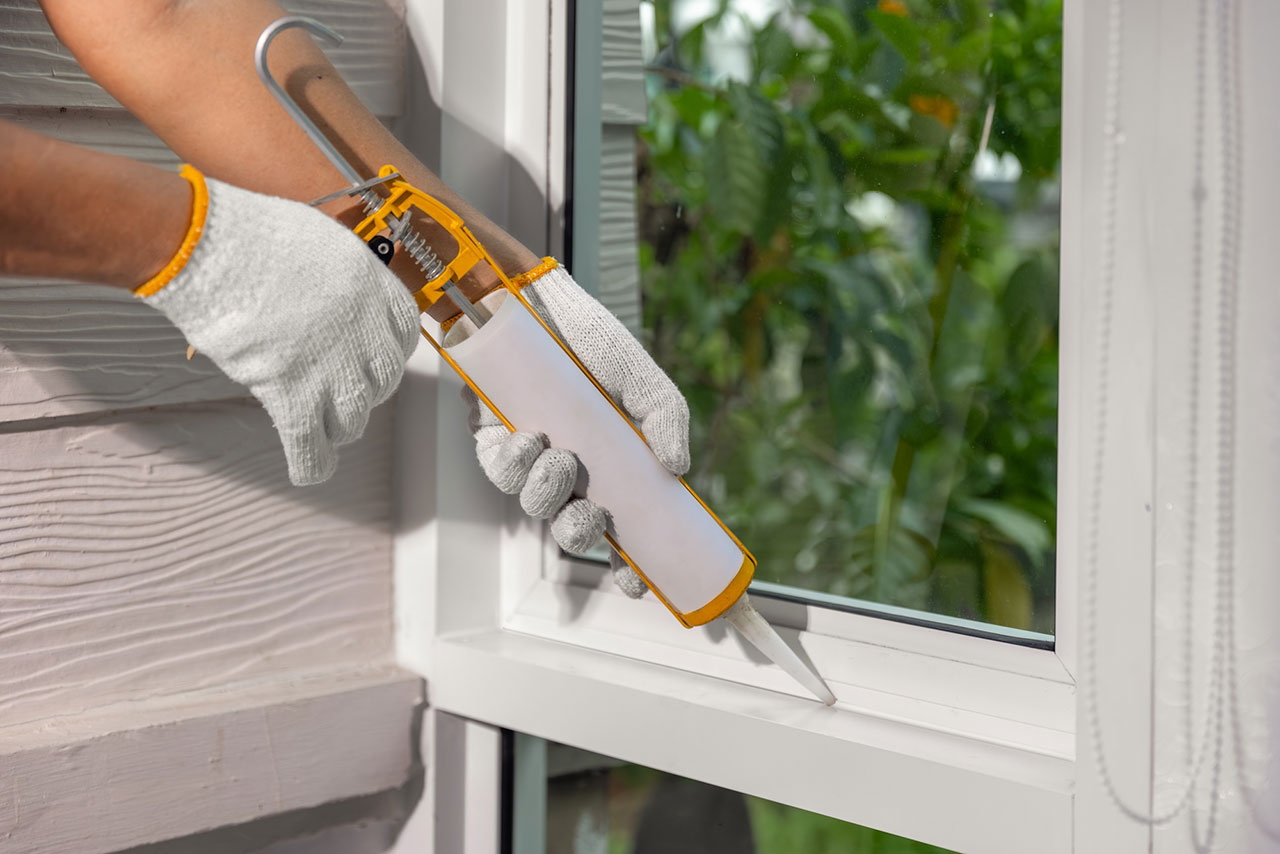
Resealing a window involves replacing the exterior caulk and weatherstripping around the frame — a DIY fix that stops drafts and costs under $50 in materials. That’s completely different from a failed insulated glass unit (IGU) seal, where fog appears between the glass panes, the inert gas has already escaped, and no amount of new caulk on the outside will solve it. If you’re not clear on which problem you have, you could spend a Saturday doing a repair that changes nothing.
This guide covers both situations: how to reseal a window frame correctly when that’s the right fix, how to diagnose when it isn’t, and a clear-eyed cost comparison to help you decide whether you’re dealing with a $15 tube of caulk or a $1,000+ window replacement.
Key Takeaways
- Exterior resealing (caulk + weatherstripping) is a DIY fix for drafts, but it cannot restore fogged insulated glass.
- Failed IGU seals (visible as condensation trapped between panes) require unit or full window replacement.
- Exterior caulk typically lasts 5-10 years; weatherstripping needs replacement every 2-3 years.
- Freeze-thaw cycles are among the leading causes of premature window seal failure in Michigan.
- When window replacement is the answer, Andersen and North Star provide the best performance and style options.
What Does It Mean to “Reseal” a Window?
The word “reseal” gets applied to two completely different problems, and mixing them up is where many homeowners go wrong.
The first is the exterior frame seal — the caulk that runs along the perimeter where the window frame meets your siding or exterior trim, plus the weatherstripping that cushions the moving sash against the frame. When this fails, you get drafts, occasional water intrusion around the frame edges, and higher heating bills. It’s a surface-level problem, and it’s fixable with a tube of caulk and an afternoon.
The second is the IGU internal seal — the hermetic bond that keeps inert gas locked between the panes of an insulated glass unit. When this fails, you see fog, haze, or persistent condensation inside the glass, between the panes. This is a completely separate system from the exterior caulk. Resealing the outside does nothing to address it.
| Definition: IGU (Insulated Glass Unit)An IGU is the sealed glass assembly in a modern double- or triple-pane window. It consists of two or more glass panes separated by a spacer and filled with inert gas (typically argon) to improve thermal performance. The seal that holds this system together is internal and not accessible from the exterior. |
Why Do Window Seals Fail?
Most exterior seal failures come from three predictable causes: UV degradation, freeze-thaw thermal expansion, and moisture swelling in wood frames. In Michigan, all three hit harder than the national average.
UV degradation is the most common culprit. Exterior caulk is a polymer, and prolonged sun exposure makes it brittle. It starts to crack, pull away from the frame, and eventually crumble. Most exterior caulk has a functional lifespan of 5–10 years before this process takes hold. South- and west-facing windows often fail first because they absorb more direct sun.
Freeze-thaw thermal expansion is the second driver. Window frames, especially aluminum and wood, expand and contract with temperature swings. In Climate Zones 5A and 5B (which covers most of Michigan), that cycle repeats hundreds of times a year, stressing the bond between caulk and substrate at every joint. The caulk doesn’t fail all at once; it fatigues slowly until a gap opens.
Moisture swelling in wood frames compounds the problem. Wood absorbs moisture during wet seasons and dries out in summer, causing the frame itself to shift slightly. Over years, that movement works against a rigid caulk bead and eventually wins.
| [BLOCKQUOTE]Our Experience: Michigan’s climate is particularly hard on exterior window seals. We see more premature caulk failure on north-facing and shaded windows — not from UV, but from moisture that never fully dries out between freeze events. If one side of your house seems to draft more than the others, orientation and drainage are worth checking before you assume the product failed. |
How to Reseal Your Window Frame: Step-by-Step
Exterior frame resealing is a DIY project. Done right, it costs $15-50 in materials and takes 30-60 minutes per window. Here’s how to do it correctly.
Materials You’ll Need
| Item | Type/Notes | Est. Cost |
| Putty knife or 5-in-1 tool | For removing old caulk | $8-15 |
| Caulk remover (tool) | Softens stubborn residue | $6-10 |
| Exterior caulk | See type guidance below | $5-15 per tube |
| Caulk gun | Standard or ratchet style | $8-20 |
| Isopropyl or denatured alcohol | Surface prep | $4-8 |
| Painter’s tape | Clean bead lines | $4-7 |
| Replacement weatherstripping | Foam tape, V-strip, or compression | $8-20 |
Caulk type matters: Use paintable latex acrylic caulk for painted wood or vinyl frames — it accepts paint well and stays flexible. Use 100% silicone for high-moisture areas (around tubs, sinks, or anywhere near water) and for bare aluminum frames. Avoid latex caulk in direct-water zones; it won’t hold.
Step-by-Step Window Frame Resealing
- Remove the old caulk completely. Use a putty knife or 5-in-1 tool to cut and peel away the old bead. Apply liquid caulk remover to stubborn sections and let it sit for 20–30 minutes before scraping.
- Clean the surface. Wipe the channel with isopropyl alcohol to remove dust, oils, and any remaining residue. The caulk won’t bond to a dirty surface, so this step is worth doing thoroughly.
- Check for weep holes. The small slots along the bottom of the window frame are drainage channels. Don’t caulk over them. Sealing weep holes traps water inside the frame and accelerates rot.
- Apply the caulk. Hold the gun at a 45-degree angle and apply steady, even pressure as you move along the joint. Aim for a bead slightly wider than the gap. Avoid starting and stopping — keep the line continuous.
- Tool the bead smooth. Use a wet finger or a caulk tool to press the bead into the joint and smooth the surface within a few minutes of application. Most caulks skin over quickly; don’t wait.
- Allow full cure time before exposing to rain. Latex caulk: 24 hours. Silicone: 24–48 hours. Check the label; temperature affects cure time significantly, and most caulks require temps above 40°F to set properly.
Replacing Weatherstripping
Weatherstripping should be replaced separately from caulk, and the type you use depends on where it’s going.
| Type | Best For | DIY Difficulty |
| Foam tape | Horizontal surfaces, low-traffic windows | Easy — peel and stick |
| V-strip (tension seal) | Sides of sashes, double-hung windows | Moderate — requires cutting to fit |
| Compression strip | Door stops, casements, awning windows | Moderate — must match frame profile |
Remove old weatherstripping completely before installing new material. Residual adhesive will prevent the new strip from seating flush.

What Is a Failed IGU Seal?
A failed IGU seal is not a caulk problem. Once the internal seal breaks, the argon gas between the panes escapes and moist air fills the space. That moisture then condenses on the inner glass surfaces when temperatures change, producing the fog or haze that’s trapped inside the glass and can’t be wiped away. The window has permanently lost a significant portion of its insulating performance.
Should You Replace Just the IGU or the Whole Window?
It depends on two things: how many units are affected, and how old the window is. According to Window Gurus, individual IGU replacement runs $125-350 per unit.
A single failed IGU on a 6-year-old window in otherwise excellent condition? That’s a reasonable candidate for unit-only replacement. But if the window is 15+ years old, or multiple units are fogging, you’re spending $125-350 per window to extend the life of something that’s already past its peak performance. In most cases, that money goes further toward a new window.
| [BLOCKQUOTE]Our Experience: The IGU-only repair conversation often happens when homeowners don’t want to hear the word “replacement.” It’s worth doing the math honestly: a single IGU swap makes sense when the frame and hardware are solid and the window was a quality unit to begin with. When frames are aging, hardware is stiff, or more than two units are fogging, the economics of repair rarely hold up against replacement. |
Signs It’s Time to Replace Your Windows Instead of Reseal
Some problems are beyond what resealing can address. Here’s a quick reference for self-diagnosing where you stand.
| Symptom | Reseal? | Replace? | What’s Happening |
| Drafts from frame edges | Yes | Not necessarily | Exterior caulk or weatherstripping failure (DIY fix) |
| Fog or condensation between panes | No | Likely yes | IGU seal failure — resealing won’t help |
| Soft, spongy, or visibly rotted frame wood | No | Yes | Structural integrity is gone |
| Window sticks, binds, or won’t latch | No | Yes | Frame distortion or hardware failure |
| Visible water staining on interior trim or drywall | No | Yes | Moisture is behind the frame (deeper issue) |
| Single drafty window, good frame condition | Yes | Not yet | Good candidate for resealing first |
Read more about when to replace your windows →

Pictured: Andersen Windows
Cost to Repair vs. Cost to Replace Windows
A full DIY reseal (caulk, caulk remover, new weatherstripping, and tools) runs $15–$50 in materials per window. It’s a half-day project for most homeowners.
Window replacement in Michigan runs on average $750 per window installed, based on 2026 pricing from Angi. Premium wood-clad or fiberglass units from brands like Andersen and North Star will land toward the higher end or above, but they also come with significantly longer lifespans and better energy performance than the entry-tier market.
The $50 repair is worth doing when the frame is sound. When it isn’t, delaying replacement rarely saves money. It usually just defers a larger project while the surrounding structure continues to absorb moisture.
Ready to explore replacement options? Explore top-rated window brands →
Window Maintenance Schedule
The good news: most of what causes window seal failure is preventable with a consistent maintenance routine. Michigan’s climate makes the fall inspection especially worth doing; you want to find problems before the first hard freeze, not after.
| Task | Frequency | Best Timing |
| Inspect weatherstripping for compression or tearing | Annually | Early fall |
| Check glass for interior condensation | Annually | On a cold morning |
| Inspect interior trim and sill for water staining | Annually | After any major rain or snowmelt |
| Inspect all exterior caulk for cracking or separation | Annually | After the first hard freeze |
| Replace weatherstripping | Every 2-3 years | Fall or early spring |
| Recaulk frame perimeter | Every 5-10 years | Early fall (above 40°F) |
Make the post-freeze inspection a habit and you’ll catch 90% of seal issues before they become water damage issues.
Ready to Explore Replacement Windows?
When resealing isn’t enough, Standard Supply & Lumber carries Andersen and North Star windows — some of the most trusted names in the industry, with options for every budget, style, and performance requirement. If you are exploring windows, we’ll help you find the right fit for your home. Explore windows →
Frequently Asked Questions About Window Repair & Replacement
How long does exterior window caulk last?
Exterior caulk typically lasts 5–10 years before UV exposure and thermal cycling cause it to crack or pull away from the frame. In Michigan’s climate, south- and west-facing windows often reach the lower end of that range. Annual inspection after the first hard freeze helps you catch failures before moisture gets into the frame.
Can you fix fog between window panes without replacing the window?
In most cases, no. Fog between the panes means the insulated glass unit (IGU) internal seal has failed, inert gas has escaped, and moisture has entered the unit. The fix is replacing the IGU ($125–$350 per unit) or the entire window. Some specialty services drill micro-holes to introduce desiccant, but results are inconsistent and the window’s energy performance is still diminished.
What type of caulk should I use for exterior windows?
Use paintable latex acrylic caulk for painted wood or vinyl frames — it accepts paint and stays flexible through temperature swings. Use 100% silicone for bare metal frames, high-humidity areas, or anywhere with direct water exposure. Don’t use interior caulk outdoors; it won’t hold up through a Michigan winter.
How much does it cost to reseal windows?
A complete DIY reseal (caulk, caulk remover, weatherstripping, and basic tools) runs $15–$50 per window in materials. No specialty tools or professional help required for exterior caulk and weatherstripping. Professional window resealing (when a contractor does it) typically runs $75–$200 per window depending on scope.
How much does it cost to replace a window?
In Michigan, standard window replacement runs an average of $750 per window installed, based on 2026 pricing from Angi. Premium wood-clad or fiberglass windows from brands like Andersen will land toward the higher end. Replacing multiple windows at once can reduce per-unit costs by 10–20% compared to tackling them one at a time.