
Floor-to-Ceiling Windows: Cost, Benefits & Where to Use Them

Floor-to-ceiling windows are one of the most impactful ways to transform a home. They bring natural light, open up expansive views, and create a seamless connection between indoors and out.
In this guide, we’ll break down everything you need to know about floor-to-ceiling windows, including their benefits, costs, design ideas, and what to consider before adding them to your home.
| What Are Floor-to-Ceiling Windows? Floor-to-ceiling windows are large window systems that extend from the floor to the ceiling, designed to maximize natural light and provide expansive outdoor views. They are commonly used in living rooms, great rooms, and modern home designs. |
Why Are Floor-to-Ceiling Windows So Popular?
Floor-to-ceiling windows have become a defining feature in modern home design—and for good reason. They offer a combination of aesthetics, functionality, and long-term value that standard windows simply can’t match.
Here’s why homeowners and builders continue to choose them:
- Maximized natural light: Large glass panels allow more daylight to enter, reducing the need for artificial lighting
- Stronger indoor-outdoor connection: Perfect for showcasing scenic views or creating a more open feel
- Makes spaces feel larger: Vertical glass draws the eye upward and outward, expanding perceived space
- Modern, high-end appeal: A sought-after feature in both new construction and renovations
- Increased property value: Considered a premium upgrade in today’s housing market
What Are the Benefits of Floor-to-Ceiling Windows?
Floor-to-ceiling windows offer more than just visual appeal—they enhance comfort while improving how a space looks, feels, and performs.
More Natural Light
One of the biggest advantages of floor-to-ceiling windows is the amount of natural light they bring into a space. This not only enhances the look and feel of a room but can also improve energy efficiency by reducing reliance on artificial lighting.
Expansive Views
Whether your home overlooks water, woods, or a landscaped backyard, floor-to-ceiling windows create a clear, uninterrupted view that standard windows can’t provide.
Enhanced Aesthetics
These windows create a clean, modern look that works across a range of architectural styles—from contemporary to transitional homes.
Increased Home Value
Because of their visual impact and desirability, floor-to-ceiling windows are often seen as a high-value upgrade that can make a home more appealing to buyers.
Floor-to-Ceiling Windows vs. Standard Windows: What’s the Difference?
Floor-to-ceiling windows and standard windows serve different purposes. Here’s how they compare side by side:
| Feature | Floor-to-Ceiling Windows | Standard Windows |
| Size & Coverage | Extend from floor to ceiling | Smaller, placed higher on walls |
| Natural Light | Maximum daylight | Moderate daylight |
| Views | Expansive, unobstructed | Limited view range |
| Design Impact | Modern, statement feature | More traditional look |
| Cost | Higher due to size & installation | More budget-friendly |
| Installation | May require structural support | Typically straightforward |
Bottom line: Floor-to-ceiling windows offer a more dramatic and design-forward result, while standard windows are more practical for budget-conscious or traditional projects.
How Much Do Floor-to-Ceiling Windows Cost?
On average, you can expect floor-to-ceiling windows to cost $1,000 to $4,000 per window, with larger custom systems or multi-panel configurations reaching $5,000 to $10,000 per opening, depending on the scope of the project, according to data from HomeAdvisor and Modernize.
Floor-to-ceiling windows are considered a premium feature, so they typically cost more than standard windows.
However, the total investment can vary widely based on the size, materials, and complexity of the installation.
While exact pricing depends on your specific project, understanding what drives the cost will help you plan more effectively and avoid surprises.
What Factors Affect the Cost of Floor-to-Ceiling Windows Installation?
Several key factors influence the overall cost of floor-to-ceiling windows:
Window Size and Configuration
Larger windows or multi-panel systems require more materials and often more complex installation, increasing overall cost.
Frame Materials
The type of framing you choose plays a major role in both cost and performance:
- Wood frames – offer a high-end look but require more maintenance
- Aluminum frames – provide durability and a sleek, modern appearance
- Composite materials – balance strength, efficiency, and longevity
Many premium manufacturers, including Andersen Windows & Doors, offer advanced composite and wood-clad options designed to deliver both durability and energy efficiency for large window systems.
Glass Type and Energy Efficiency
High-performance glass options—such as double-pane or triple-pane glass with Low-E coatings—can increase upfront cost but improve insulation and long-term energy savings.
Installation Complexity
Installing floor-to-ceiling windows may require:
- Structural modifications
- Reinforcements to support large openings
- Additional labor for custom fitting
These factors can significantly impact total project cost.
Customization and Design Features
Custom shapes, grid patterns, specialty finishes, and integrated doors (like sliding or folding systems) can all increase the price.
| If you’re planning a window or door upgrade, download our guide “Where Craft Meets Clarity: Designing with Windows & Doors That Impress,” to explore design strategies, product options, and planning tips. Download the Free Guide |
What Should You Consider Before Installing Floor-to-Ceiling Windows?
Installing floor-to-ceiling windows requires more than just design planning. Several key factors can affect how they perform over time.
Energy Efficiency
Because of their size, these windows can impact heating and cooling if not properly specified. Choosing high-performance glass and quality framing is key to maintaining energy efficiency.
Privacy
Large windows can expose interior spaces, especially in more densely populated areas. Carefully planning placement (or incorporating window treatments) can help maintain privacy.
Sun Exposure
Direct sunlight can lead to heat gain and glare. Orientation matters, and solutions such as Low-E coatings or shading systems can help manage it.
Window Treatments
Due to their height, floor-to-ceiling windows often require custom or motorized window treatments. It’s best to plan for these early in the design process.
Where Do Floor-to-Ceiling Windows Work Best in a Home?
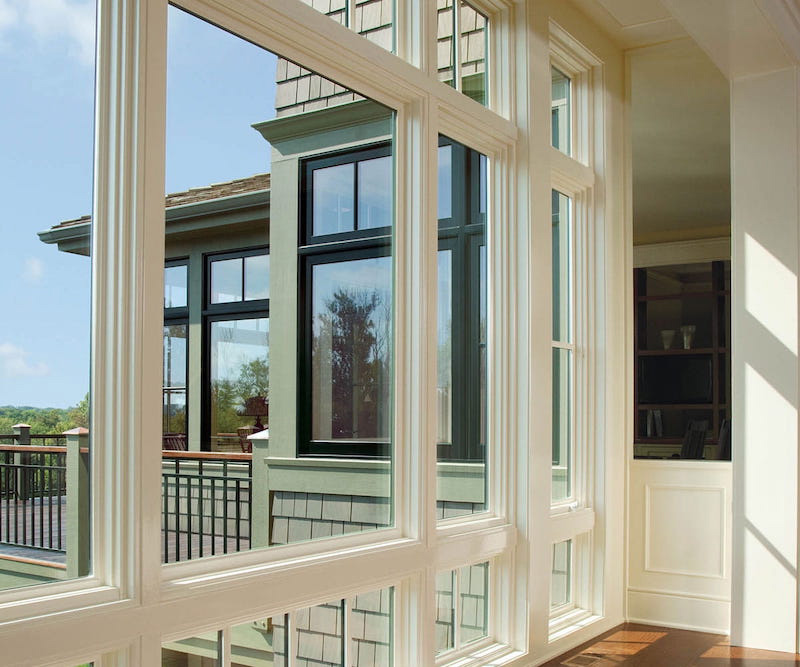
Floor-to-ceiling windows can be used throughout a home, but they have the biggest impact in spaces where light and views matter most.
The most popular applications of floor-to-ceiling windows include:
- Living rooms and great rooms: Create a bright, open focal point
- Dining areas: Enhance the overall experience with natural light
- Primary bedrooms: Bring in light while highlighting outdoor views
- Entryways and stairwells: Add architectural interest and vertical impact
- Homes with scenic surroundings: Maximize views of water, woods, or landscapes
What Are the Best Window Brands for Floor-to-Ceiling Windows?
Choosing the right window manufacturer is just as important as the design itself. High-quality materials and engineering ensure long-term performance, energy efficiency, and durability.
Andersen Windows & Doors is known for offering premium window solutions that combine design flexibility with strong performance. Their product lines include options specifically suited for large window openings, with advanced glass technology and durable framing systems.
Working with a trusted supplier helps ensure your floor-to-ceiling windows not only look great but also perform reliably for years to come.
Are Floor-to-Ceiling Windows Worth It?
For many homeowners and builders, the answer is yes—floor-to-ceiling windows are a worthwhile investment that can dramatically enhance both the look and functionality of a space.
Budgeting for floor-to-ceiling windows is a smart choice when you want to:
- Maximize natural light
- Highlight scenic views
- Create a modern, high-end aesthetic
- Add long-term value to your home
When properly designed and installed, floor-to-ceiling windows can completely transform a space by maximizing daylight while maintaining structural integrity.
Ready to explore floor-to-ceiling window options for your next project?
Browse premium solutions from Andersen Windows & Doors, or connect with the team at Standard Supply & Lumber for expert guidance, product recommendations, and help selecting the right system for your space.
FAQs About Floor-to-Ceiling Windows
Are floor-to-ceiling windows energy efficient?
Yes, when built with high-performance glass and properly framed, floor-to-ceiling windows can be energy-efficient. Features like Low-E coatings and insulated glass help regulate indoor temperatures.
How much do floor-to-ceiling windows cost?
Costs vary based on size, materials, and installation complexity, but they are generally more expensive than standard windows due to their scale and customization.
On average, floor-to-ceiling windows typically cost between $1,000 and $10,000+ per opening, depending on size, materials, and installation complexity.
Do floor-to-ceiling windows increase home value?
Yes, floor-to-ceiling windows increase home value. They are considered a premium feature that can increase both perceived and resale value.
Can you add floor-to-ceiling windows to an existing home?
In many cases, yes—you can add floor-to-ceiling windows to an existing home. However, it often requires structural modifications and professional installation to ensure the opening is properly supported.
We recommend consulting a building expert or supplier early in the planning process to assess structural requirements, product options, and installation considerations before moving forward.
Do you need special window treatments for floor-to-ceiling windows?
Often, yes, you do need special window treatments for floor-to-ceiling windows. Because of their size, custom or motorized window treatments are commonly used for privacy and light control.
Are Floor-to-Ceiling Windows Right for Your Home?
Floor-to-ceiling windows offer a unique combination of beauty, functionality, and long-term value. From maximizing natural light to creating a stronger connection to the outdoors, they can completely transform how a space looks and feels.
Ready to explore floor-to-ceiling window options for your next project?
Browse premium solutions from Andersen Windows & Doors or connect with the team at Standard Supply & Lumber to get expert guidance and product recommendations.